Details are generalized for confidentiality.
Alert Triage Agent
I directed the team behind Purview’s Alert Triage Agent, a Security Copilot agent that assesses and ranks data loss prevention alerts. Mallory Rath, the AI UX Lead, drove day-to-day design in close partnership with Product.
- Organization
- Microsoft Purview
- Role
- Partner Product Design Director
- Timeframe
- 2025
- Focus
- AI experience strategy, Human control, Trust and auditability
I directed the team, set the quality bar, and aligned Product and Engineering on how analysts supervise and correct the agent.

One-third of alerts were never reviewed
Before the agent, about one-third of alerts were never reviewed. Analysts needed to know which alerts deserved attention and why. The goal was to answer that first question before they opened an alert.
The team agreed on three principles up front.
- Design for where agents are going, not only a better queue.
- Let each company define what risk means for its business.
- Show the evidence analysts need to decide quickly.

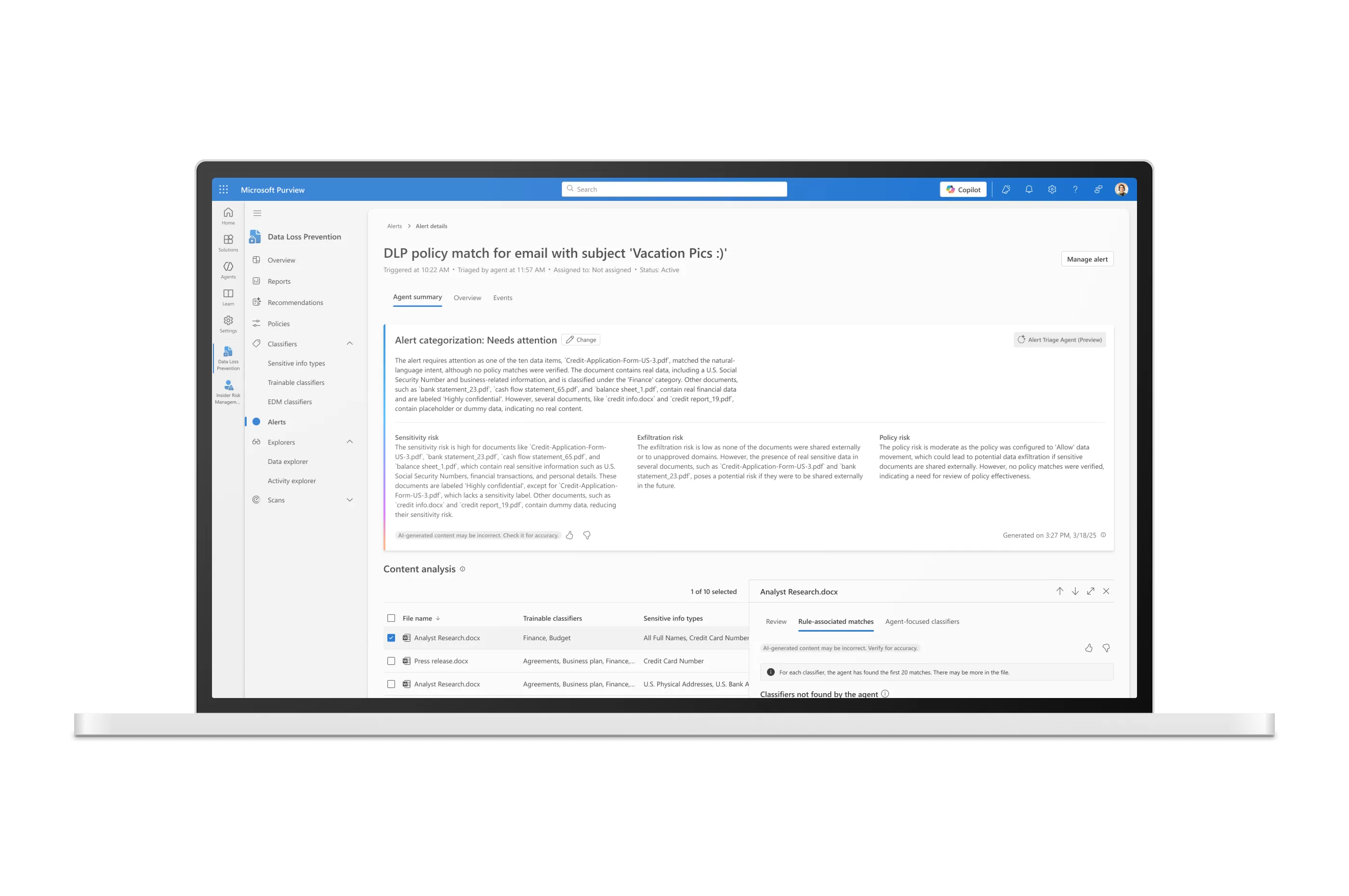
The first release simplified too much
The agent reached general availability in about 12 weeks, in December 2025. It was built for analysts to verify, correct, and audit.
The first design simplified the queue and removed signals analysts relied on. Analysts returned to the old queue, and some customers turned the agent off.
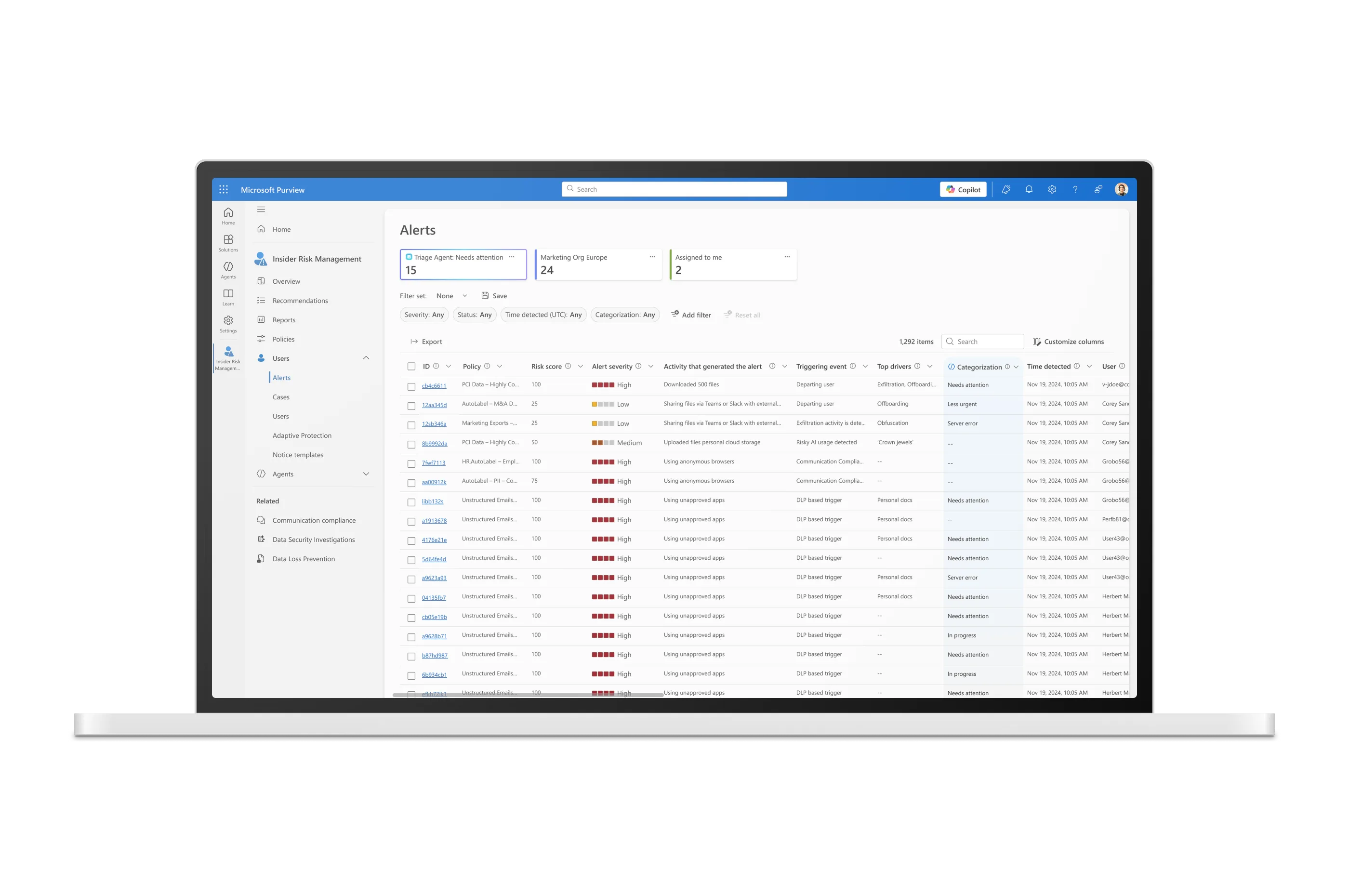
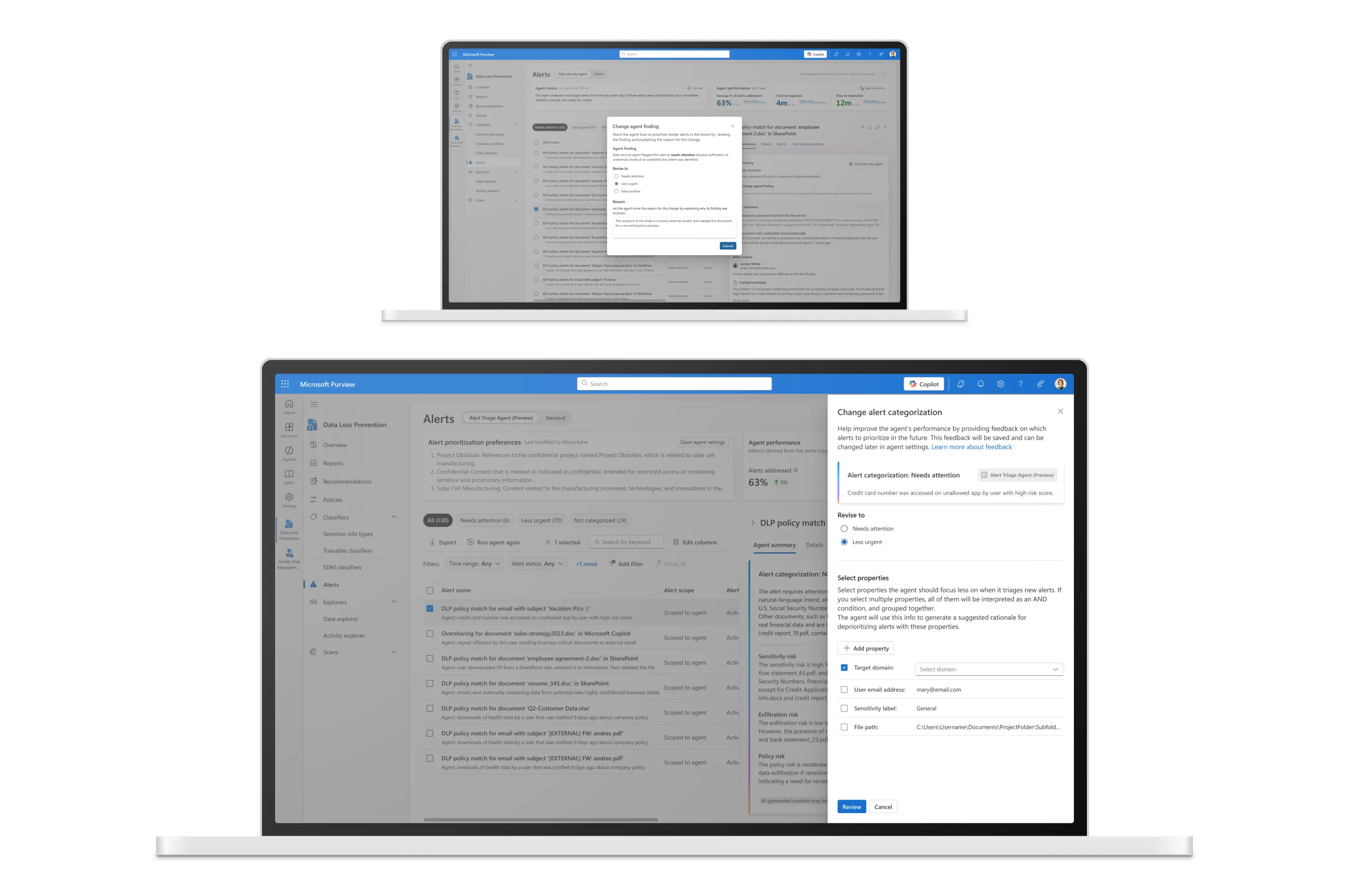
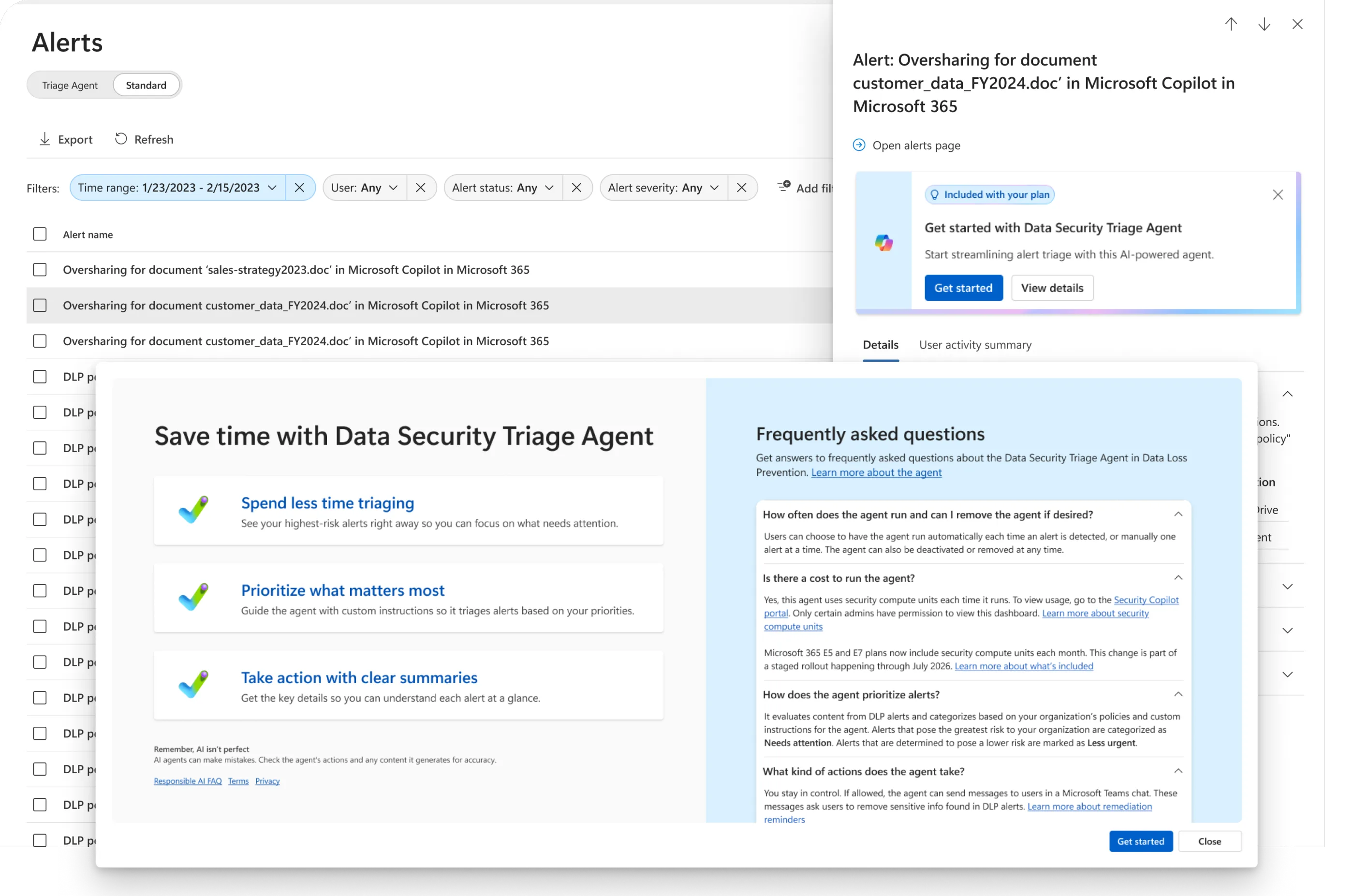
Keep the signals experts use to verify the agent
Research showed analysts needed the signals they already trusted. The team added four familiar signals beside the agent’s assessment: risk score, severity, activity, and top drivers.
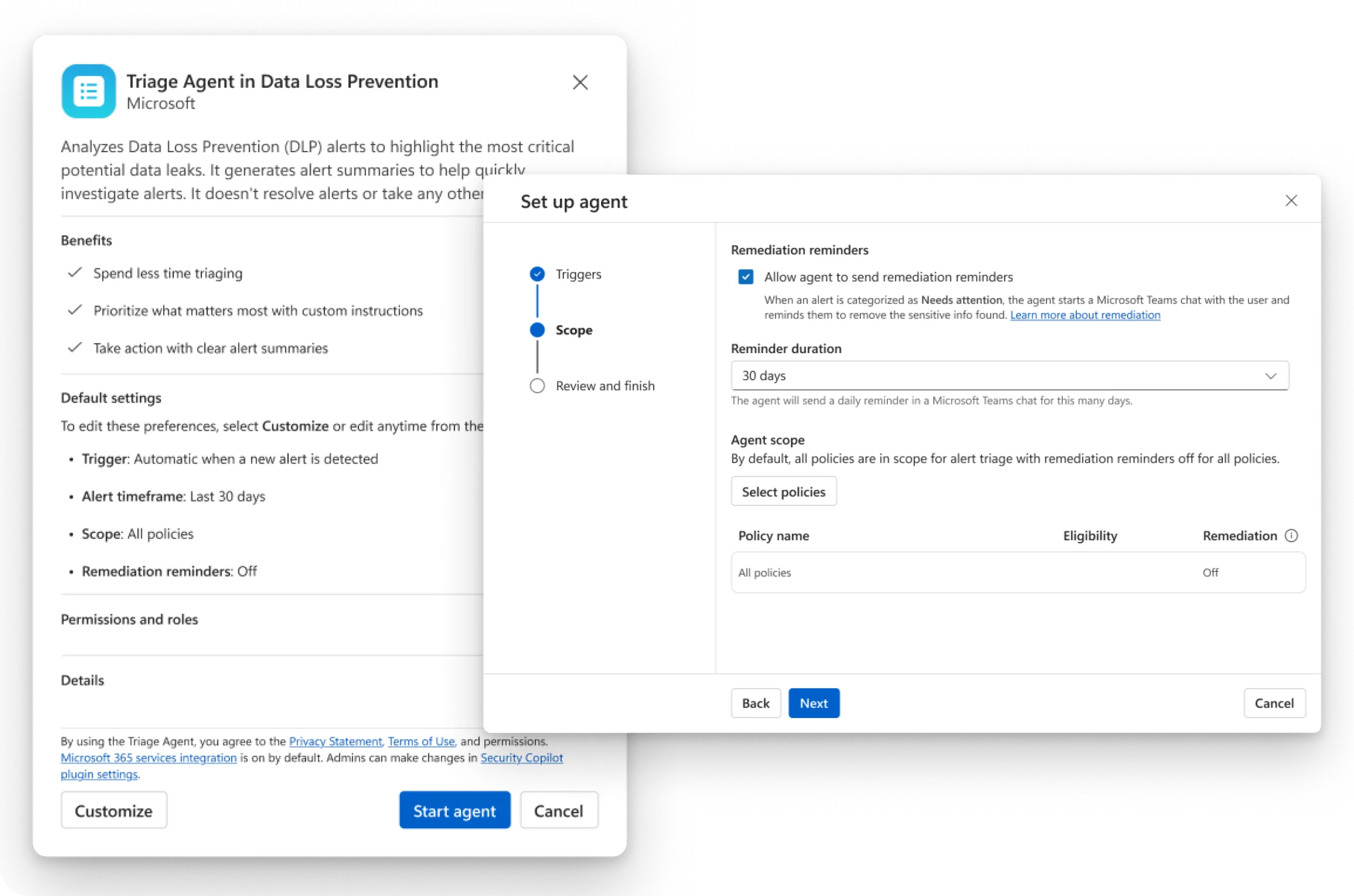
The team also moved corrections to a structured, auditable form and designed one-step setup with safe defaults. Deployment nearly doubled.
Keep expert judgment visible
In its first quarter after general availability, the Alert Triage Agent triaged more than 2 million unique alerts. Satya Nadella cited it on an earnings call.
When an agent changes expert work, preserve the signals people use to judge the result. Verification builds trust over time.